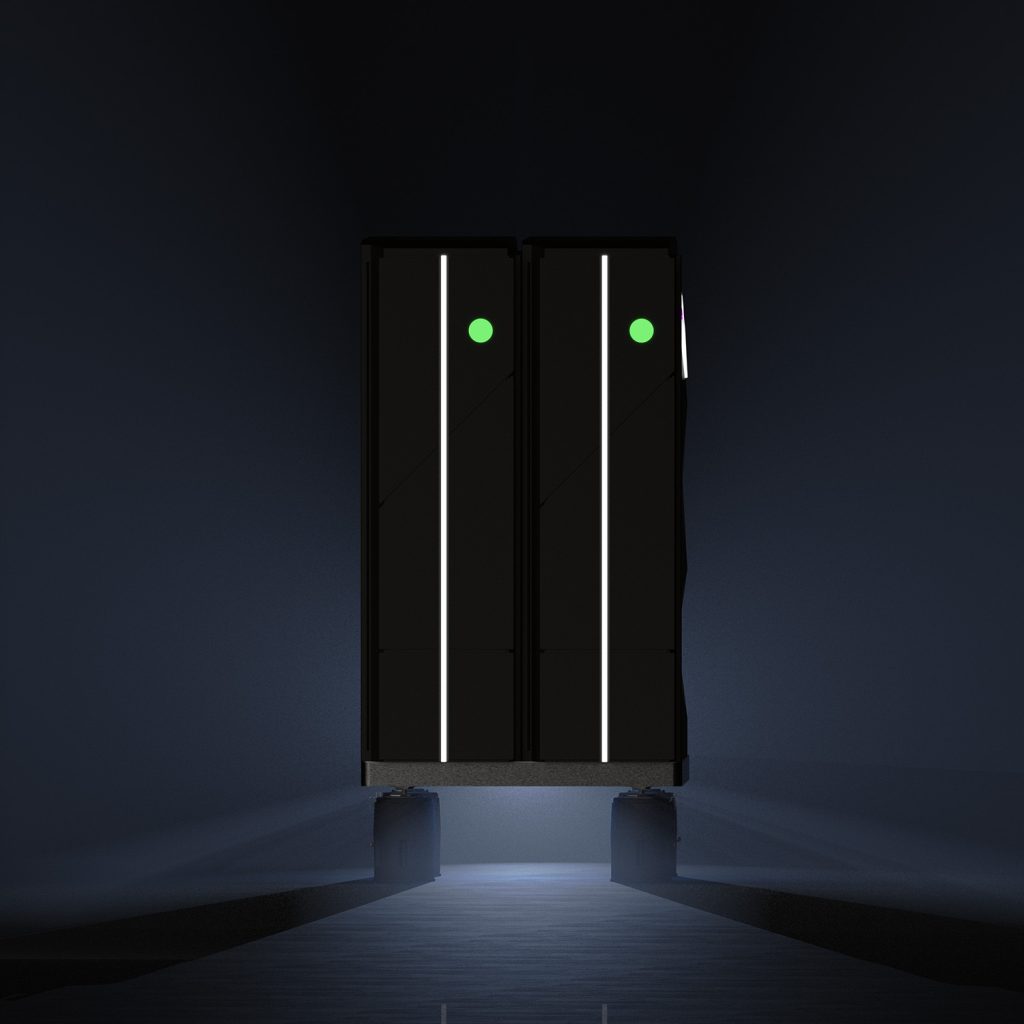
 Q-Block Module Ecosystem
Q-Block Module (Q-module) is an integrated quantum photonic platform. Inspired by superscalar architecture for classical HPC, Q-modules are designed for distributed quantum systems. Q-server disseminates optical references to individual Q-modules with an optical frequency comb backplane and synchronize the Q-modules with sub-nanosecond timing instability for real-time MIMO orchestration.
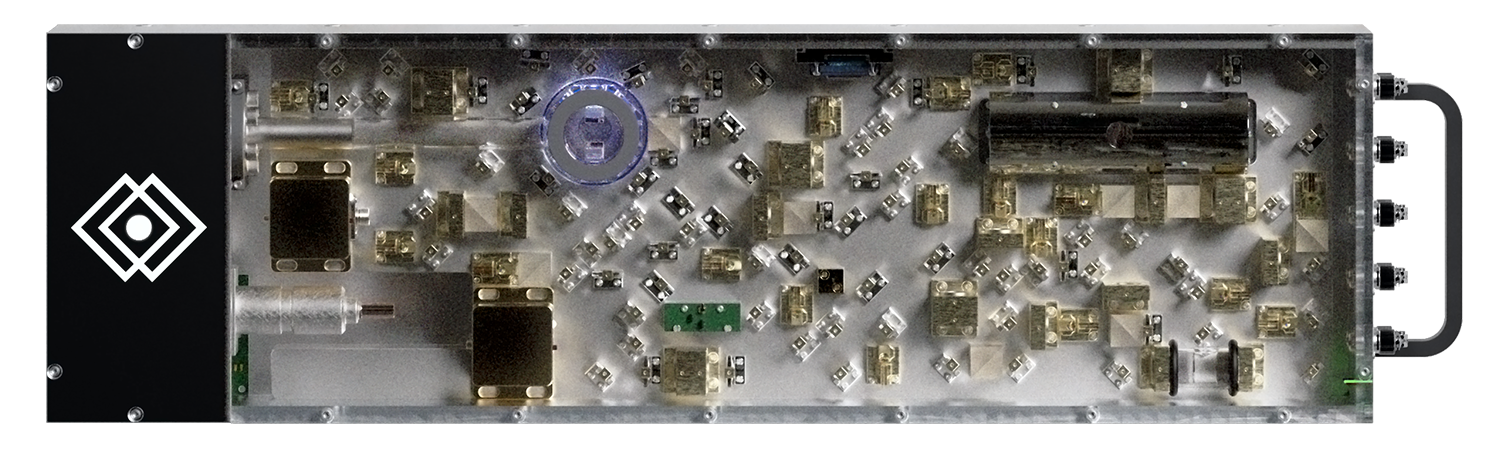
Q-Block Modules: One Architecture. Three Platforms.
Each Q-module integrates the four building blocks that quantum systems are made of — coherent light, ultra-stable references, precise modulation, and quantum-limited detection — into a single platform engineered to industrial standards. The module ecosystem is composable by design: the same building blocks that drive a deployed quantum clock are the building blocks that stabilize a quantum memory, hold a tweezer array, and orchestrate a modular quantum processor. One ecosystem, one architecture, three product lines.
Building Block
Software Defined Lasers
Ultra-narrow-linewidth, mode-hop-free tuning, programmable in frequency, amplitude, phase, and lock — coherent light, fully addressable.
Ultra-High-Finesse Optical Cavities
The frequency reference of the module — engineered to hold stability in real conditions, not only on the bench.
Optical Modulators
High-speed, low-noise control of phase, amplitude, and frequency — coherence preserved as software-defined intent acts on light.
Quantum-Limited Photodetectors
Shot-noise-limited detection across the wavelengths and bandwidths that quantum measurement demands — the floor where light becomes information.
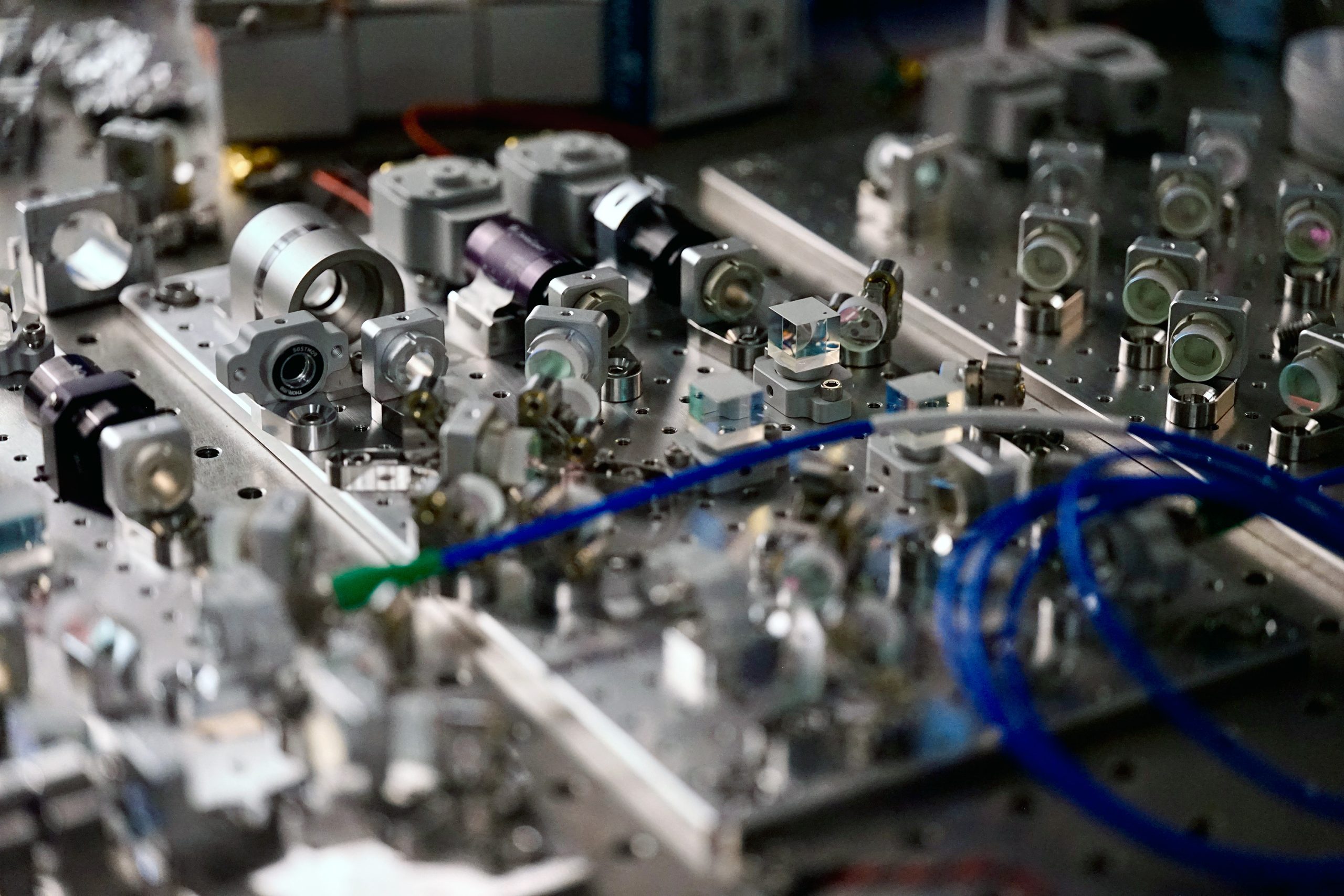
Architecture
Qubit Composer
The Qubit Composer is the custom-silicon control brain inside every Q-module. It synchronizes quantum operations at the clock level and coordinates them across distributed modules through bespoke direct memory access — moving instructions and waveforms in-memory at the timing the physics demands. The result is a control surface fast enough to follow the physics, deterministic enough to coordinate it across modules, and programmable enough to compose new quantum operations rather than play back preset ones.
Q-module — Blade Form Factor
Each Q-module is delivered in a blade format engineered to slot into the Q-server rack and operate as a coherent unit of the larger system. The blade form factor is what allows the ecosystem to scale: modules are added, replaced, and reconfigured as cluster components rather than as standalone instruments.
Q-server — Optical Frequency Comb Backplane
Q-server is the orchestration layer immediately above the modules, delivered in a 4U rack format. It distributes a common optical reference across the rack through an optical frequency comb backplane, holds sub-nanosecond timing across all modules, and exposes the cluster as a single coherent quantum machine. Q-server is what turns a population of Q-modules into a single distributed quantum system — the foundation on which real-time MIMO orchestration of quantum operations is built.
Q-manager — Cluster Control Layer
Q-manager is the system-level control layer above Q-server. It holds the topology of the cluster, schedules and dispatches experimental sequences, and orchestrates the population of Q-servers as a single coherent machine — turning a rack of quantum infrastructure into a single addressable quantum system.